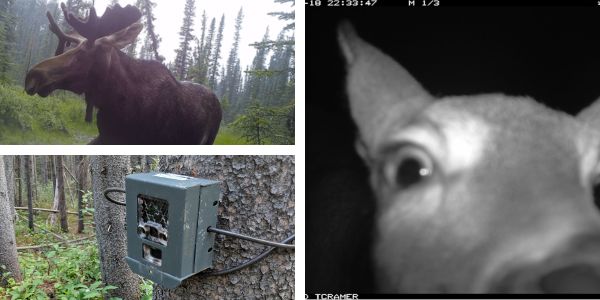
Lights, camera, action! Meet this summer's rising stars in the Yellowstone to Yukon region.
From protecting one of British Columbia’s last intact wild places to a travelling lynx and a new generation of storytellers, this edition of Connections celebrates the people, places, and wildlife that make the Yellowstone to Yukon region extraordinary.
Thank you for joining us on this journey.
Grab your popcorn, press play, and get ready to be inspired — we appreciate your help keeping nature connected.
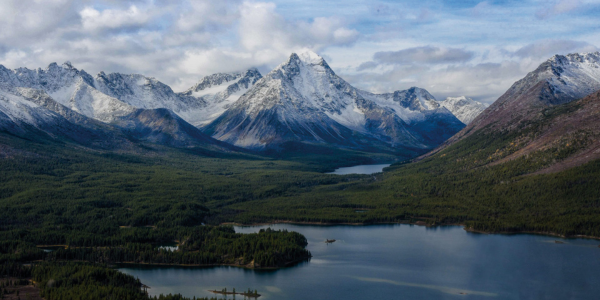
Planning underway to protect Dene K’éh Kusān in northern B.C.
The biggest, wildest place you’ve never heard of could be protected forever
A major milestone has been reached in the effort to protect one of British Columbia’s last great and intact wild places. The draft Kaska-B.C. land-use plan, which includes protection for the Dene K’éh Kusān region, is now available for public review and comment. British Columbians can help shape the future of the province’s largest intact wilderness landscape.
Spanning an area approximately the size of Vancouver Island in northwest B.C., Dene K’éh Kusān (which means “Always Will Be There” in Kaska) is the largest intact, unprotected wild landscape in the province.
The Kaska Dena have stewarded these lands for generations and their vision for Dene K’éh Kusān offers a path to protect wildlife, clean water, and cultural values while creating lasting opportunities for recreation, tourism, and Indigenous stewardship.
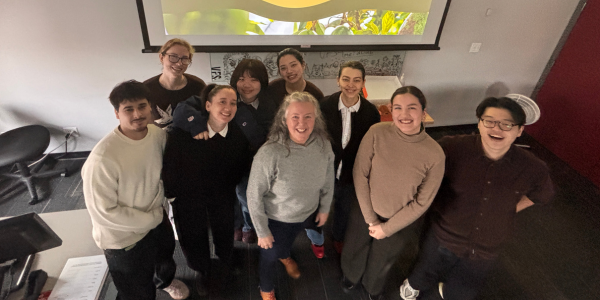
Building a new generation of conservation storytellers
The next generation of storytellers will play an important role in shaping a future where people and nature can thrive together
Earlier this year, Y2Y partnered with students in the Digital Design program at the Vancouver Film School, inviting three student teams to develop creative concepts that could inspire more people to care about wildlife connectivity and the importance of protecting the Yellowstone to Yukon region.
Over an intensive seven-week project, students worked from a real-world brief, pitching their ideas, refining their concepts with feedback, and presenting their final work. The results were imaginative, thoughtful and inspiring.
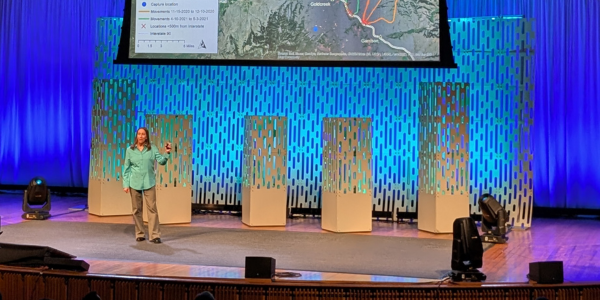
Giving wildlife room to roam: Y2Y at Boston TEDx
Large scale conservation is happening right now, across borders and generations
Last November, Y2Y’s president and chief scientist, Dr. Jodi Hilty, stepped onto the TEDx stage at MIT in Boston with a radical yet elegant solution to stop biodiversity loss and address climate change — give nature room to move.
As an invited speaker at Planet Action TEDx, a gathering of the world’s boldest environmental thinkers, Jodi made the case for something counterintuitive in our age of intervention and control. The best thing we can do for biodiversity and climate isn’t always to do more. Sometimes, it’s to create space for the wild to reclaim what it needs.
Bears are returning near the Continental Divide
Three private land deals advance ecological connectivity across the U.S. Rockies
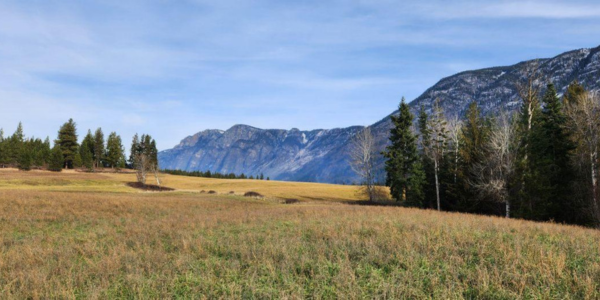
This spring, Y2Y and our partners proudly announced the closing of three conservation easements along the Continental Divide in Montana and the Selkirk-Cabinet mountains region of North Idaho. These are important areas where grizzly bear populations are returning, and where private land conservation helps to build the greater web of wildlife connectivity.
From north to south, each project protects a piece of the private lands puzzle that wildlife, and particularly grizzly bears, need to move across a connected landscape between Yellowstone, the Crown of the Continent and into Canada.
These deals share something else in common: in each case, the landowner donated all or a significant portion of the property’s value to the conservation easement. That kind of generosity is the foundation of a family legacy and durable conservation.
Meet everyone’s favourite lynx, Bruce Canowski
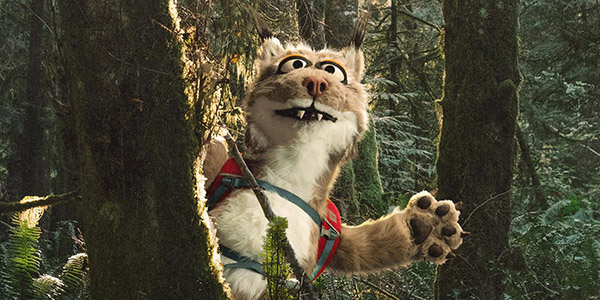
Bruce the puppet lynx has packed his snacks and is travelling across B.C.'s backroads, exploring wild places as he goes
As part of the Wildly Serious campaign in B.C., Bruce is on a mission to bring the people and organizations who live and work in the province together to advocate for its outdoors.
On the road, he caught a glimpse of the Skeena River and just knew he had to fish. Down on the Bulkley, Bruce ran into Todd Stockner, a fly-fishing guide. Todd told Bruce about what keeps all this salmon coming back and that when we take care of wild spaces, there's spaces for everyone to thrive. This lynx has stories to tell — don't miss the next one!
Streaming, wildlife, and how one vtuber is working to support conservation
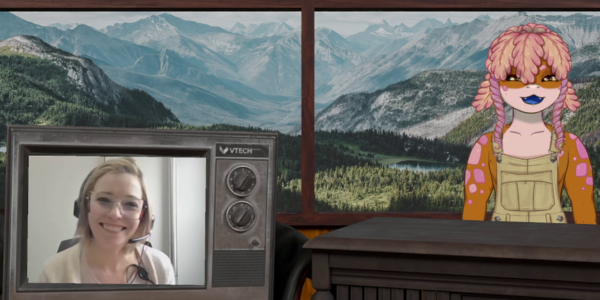
Brynlea is an artist-virtual YouTuber who loves exploring technology, artistic expression, and how to live sustainably with nature
Earlier this summer, Y2Y’s donor relations manager Robin Forsyth joined Brynlea in her livestream to talk about the work behind the scenes of wildlife crossings, protected areas, and how artists are leading the charge in conservation.
We sat down with Brynlea to learn more about why she chose to support Y2Y, and the role she believes artists can play in protecting wild places.
New research calls for a Nature Positive approach to stabilizing the planet
For over 30 years, Y2Y has been an example of the Nature Positive movement
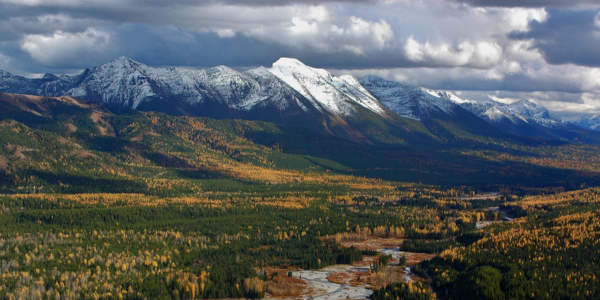
Newly published research shows saving species and fighting climate change work best when we tackle them together, not separately.
In a new paper published in the prestigious journal Frontiers in Science, “Nature Positive: halting and reversing biodiversity loss toward restoring Earth system stability,” a team of authors — including Y2Y co-founder and strategic advisor, Harvey Locke — show a clear path forward for why putting nature first matters to fight climate change.
The challenge before us is clear — humans have destabilized the Earth system by harming too much nature, changing the climate, and the processes that are essential to the functioning of the planet in a way that benefits people. The paper’s goal is to have humanity come together to solve our biggest problem — which is towards stabilizing the Earth system, having more thriving nature on Earth and making a mind shift towards living in a way that is Nature Positive.
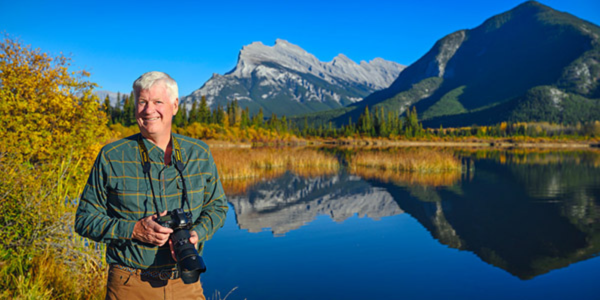
Y2Y co-founder and Nature Positive co-author, Harvey Locke, spoke at London Climate Action Week with the Green Finance Institute
How investing in nature as a product, that will appreciate in value over time, is part of the economy that moves the world
Half of the world’s economy depends on nature. We need clean water, pollination for crops, healthy soils, and healthy people. The paper shows how we can update our economic systems to recognize nature’s true value — not as a luxury or optional, but as essential to our lives and livelihoods.
“In market terms, nature is worth more dead than alive. We have to fix that. When we value nature first, we create infrastructure for planetary stability. People need nature to survive,” says Locke.
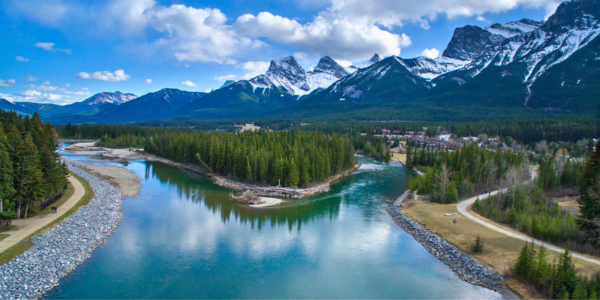
Y2Y director receives prestigious award for outstanding contributions to mountain research
Dr. Graham McDowell receives the Canadian Association of Geographers' 2026 award for scholarly distinction in geography
Graham’s work focuses on how climate change is reshaping mountain regions, including supporting responses that are both socially just and ecologically sound so people and nature can thrive in changing mountain landscapes.
Today, Graham brings this experience to his role as director of science and knowledge at Yellowstone to Yukon Conservation Initiative. He and his team work to advance research and partnerships that support landscape protection and connection, human-wildlife coexistence, and nature‑positive climate action across one of the planet’s largest and wildest connected mountain regions.
In celebration of this achievement, we sat down with Graham to learn about his perspective as a geographer, including how his work intersects conservation and climate change.
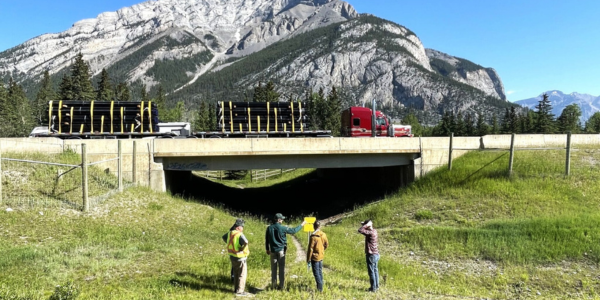
Yahoo! Montana and Alberta team up during Calgary Stampede for safe passage
Transboundary collaboration of government agencies builds momentum for wildlife crossing projects
In June, while the Calgary Stampede filled the streets with music and crowds, a quieter kind of progress was building just outside the city. Leaders from the Montana Department of Transportation and Alberta’s Ministry of Transportation and Economic Corridors met to walk the landscape together touring the wildlife crossing network along Highway 1 through the Bow Valley and Banff National Park in Alberta.
This is exactly how lasting change is built: multiple agencies, one shared cause, and a willingness to learn from what’s already working.
What made this trip stand out wasn’t just engineering; it was the spirit behind it and seeing an entire system of wildlife crossing projects working together.
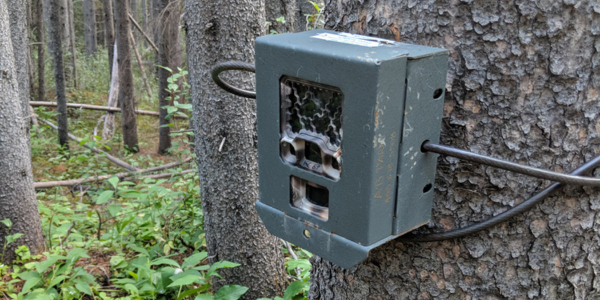
Eyes in the field
Remote trail cameras, or camera traps, provide perspective on wildlife movement and shared space in the Yellowstone to Yukon region
Ever been in the forest and felt like something was watching you? It probably was! Wildlife surrounds us, listening and watching — even if you don’t see it.
Trail cameras, game cameras, camera traps, and remote wildlife cameras are an important part of seeing what seems invisible. These motion-activated cameras are used widely in research to find out more about wildlife and the spaces people share with them. They are a safe and non-intrusive way to monitor and track the movements of animals of all sizes.

The September Match is on the move!
This September, something exciting is coming your way
Y2Y board members are stepping up to MATCH your donation to help connect and protect the Yellowstone to Yukon region.
This remarkable landscape is alive and always moving. Grizzly bears roam in search of food and mates. Herds migrate with the seasons. Even plants shift across the landscape as the climate changes.
And soon, Y2Y board member and former NHL star Scott Niedermayer (pictured above) will be passing the puck to you — with a chance to double your impact for wildlife.
More connected habitat. More room to roam. Twice the impact.
The countdown is on. Let’s keep the wild moving!
Image credits: Header photo left (top to bottom), Pam Wright, Kelly Zenkewich; Header photo right, Kim Trotter; Dene K'éh Kusān, Dena Kayeh Institute; Vancouver Film School students, supplied photo; Jodi at TEDx, Eric Sanderson; Dillin Farms property, Kanisku Land Trust; Bruce Canowski, Shot in the Dark Productions; Brynleabuilds livestream, Brynlea; Mountains in Fall, Harvey Locke; Harvey Locke, Kristian Bogner ; Bow River and Rocky Mountains in Canmore, Shutterstock; Calgary Stampede Collaboration, Laurel Angell; Trail camera, Kelly Zenkewich; Scott Niedermayer, supplied photo.
|