Summer in the Yellowstone to Yukon region is alive with stories — of connection, creativity, and conservation.
From a student-led mural to tiny salamanders and textile art, this edition of Connections celebrates the people, places, and wildlife that make the Yellowstone to Yukon region extraordinary. We’re glad you’re with us.
Dive in, be inspired — and thank you for helping us keep nature connected.
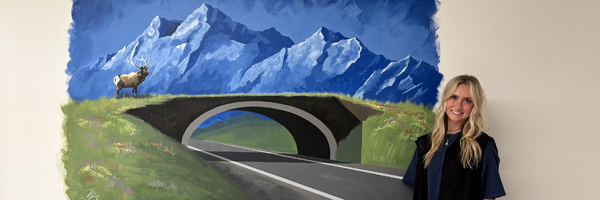
The kids are alright
A Montana student’s mission to highlight wildlife crossings through art and action
Montana high school graduate Kylie Bute is a wonderful example of the care and attention the next generation is paying to the world around them. In this case, Kylie’s using the natural world and offline experiences as inspiration to bring awareness to conservation through art.
When challenged to find an idea for her 12th grade capstone project, she found inspiration in a video she’d seen in her environmental studies class. The video — From Ants to Grizzlies — features Y2Y’s president and chief scientist, Dr. Jodi Hilty.
The video taught Kylie about the importance of connected landscapes for wildlife movement. And about how wildlife crossings over and under busy roads and highways can save lives — both human and wildlife. She was particularly inspired when she learned that the Y2Y region stood out for having 177 wildlife crossings.
“That really impressed me. Crossings are a tangible solution because there’s really no downside to them—they’re effective, they save lives, and they’re cost-efficient in the long run. Unlike other environmental issues that can be controversial, wildlife crossings just make sense,” says Kylie.
And for Kylie, this discovery was personal.
Like many students her age, Kylie is a new driver who loves the outdoors and getting into nature to discover and experience beautiful places. Unfortunately, early in her time behind the wheel, she experienced what many in the region have — a collision with wildlife. So, together with the video, this experience inspired her to create her senior project — a mural of a wildlife overpass featured prominently on a wall in her high school.
Kylie hopes her mural instills curiosity and creates long term support for wildlife crossings amongst students and teachers and reinforces the important role they play.
Well done Kylie. We look forward to seeing where your inspiration takes you next!
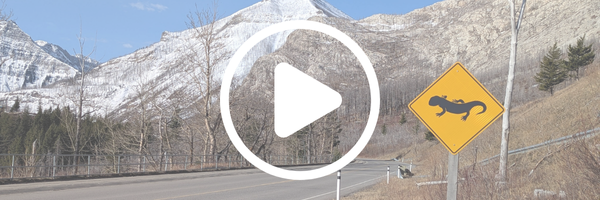
Small solutions making a big difference
Connecting habitat for species of all sizes
When we think of wildlife crossings, we often picture some of the region’s larger mammals using them: bears, elk, bighorn sheep and more. But even some of the smallest creatures, like long-toed salamanders (a tiny but top predator in its habitats) need support on their journey to and from ponds to lay their eggs.
Since 2008, four specially built wildlife underpasses along the road to Waterton Lakes National Park (also known as Paahtómahksikimi) in southern Alberta have helped reduce salamander mortality from 44% to 0.6%. That’s a sizeable impact for such a small creature.
Wildlife crossings are a significant and important part of Y2Y’s landscape connection work to connect habitats so wildlife can safely move, feed, mate and migrate. We work with communities, governments, scientists and partners across the Yellowstone to Yukon region to make roads safer for all — people and wildlife. Our work includes identifying wildlife corridors, identifying high-risk wildlife-vehicle collision areas, advocating for more crossing structures and fencing and, for the long run, advocating for more stable funding to support this infrastructure.
Each successful crossing — regardless of the size of creature it supports — supports this work, whether for salamanders or grizzlies, and is a step toward a connected and thriving landscape for generations to come.
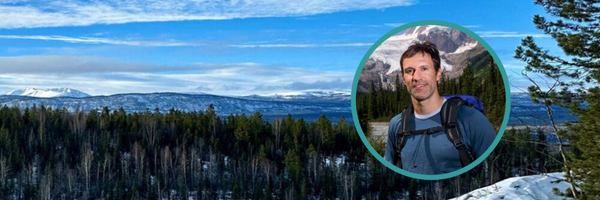
From vision to reality: British Columbia’s northwest land use strategy
A strong game plan for B.C.’s wildlife, lands and waters
In June, British Columbia launched a strategy to guide land use planning across approximately 16 million hectares (i.e., the equivalents of 101 million NHL hockey rinks, or an area larger than Greece) in the northwest corner of the province — an area rich in salmon runs, intact forests, cultural heritage and mineral potential.
The initiative brings together the provincial government, First Nations, industry, communities, and conservation organizations in a shared effort to shape the region’s future based on reconciliation, biodiversity, and resilient economies.
Y2Y board member Scott Niedermayer, a Hockey Hall of Famer, dedicated conservationist and B.C. resident, recently wrote about how this strategic, team-based approach resonates with his values. Drawing parallels between hockey and thoughtful land stewardship, he emphasized that planning with a shared vision and clear roles can lead to strong results, on ice and across the landscape.
The land-use planning process will include identifying new Indigenous-led protected areas and wildlife corridors, respecting traditional law and values, and ensuring economic opportunity through responsible resource use. Now that’s a hat trick!
The Y2Y landscape protection team has been closely involved in this project in three ways:
- playing a key role in advocating for this process and for pausing resource development while the process unfolds,
- working to bring diverse stakeholders into the process to have their perspectives heard, and
- hiring contract support to work on Y2Y’s behalf with Indigenous partners and on caribou conservation science (understanding the impact of industrial development on caribous and their habitat).
Your continued support for the work we do makes our contributions and impact possible — thank you!

What if every dollar you gave could become TWO dollars for wildlife?
The September Match — our biggest — is just around the corner
Get ready for something special. This September, passionate Y2Y board members and a dedicated supporter are stepping up to MATCH every single donation to connect and protect the Yellowstone to Yukon region and the wildlife who call it home.
This isn't just any match campaign, this is our most ambitious September Match ever!
Wildlife corridors. Habitat protection. Climate resilience.
Your impact x 2.
The countdown starts now. Because nature can't wait — and neither should you.
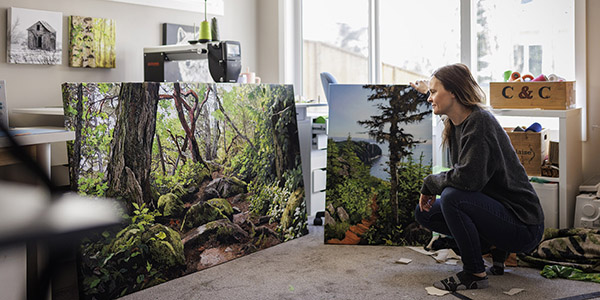
Threads of connection: art inspired by the wild
“At its core, my work is about connection. I believe we’re all part of the same ecosystem — people, animals, and the land — and when that balance is disrupted, we all feel the effects.”
For textile artist Alison King, art and nature are intertwined. Her intricate creations capture not just how the Rockies look, but how they feel. Vast, peaceful, alive. Through her art, she invites us to reflect on our own connection to the wild and the responsibility we share to care for and protect it.
Her journey into wildlife textile art began with an unforgettable encounter: meeting Eska, a striking wolfdog at Yamnuska Wolfdog Sanctuary near Cochrane, Alberta.
“I knew I wanted to create her,” she recalls. That visit opened her eyes to both the beauty of these animals and the growing pressures on their habitats. It was also a powerful reminder that people and wildlife share the same land — and that connection is worth celebrating.
Since then, she’s turned her attention to the species and landscapes she encounters in and around Banff National Park. “They impact my artwork greatly, so I feel a responsibility to highlight their importance,” she says.
At its core, her work is about connection — between people, wildlife, and land. “The power to open eyes to landscapes and wildlife that some may never experience firsthand…Art can move us, it can make people pause, reflect, and see the world differently. In a time when wild spaces are shrinking and wildlife is under increasing pressure, that emotional connection is more important than ever,” says Alison.
Through her art, she reminds us that we’re not separate from nature — we’re a part of it. And when we care about something, we’re moved to care for and protect it.
At Y2Y, we’re grateful for supporters like you whose love for nature and the Y2Y region makes it possible to protect the landscapes and wildlife that inspire artists like Alison.
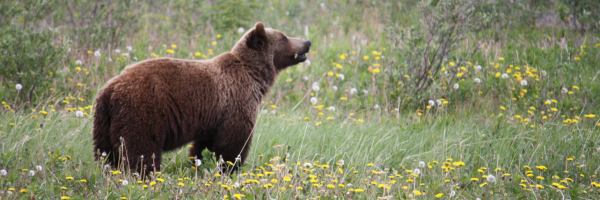
Be bear aware
How a passionate community and experts came together in Missoula to reduce human-wildlife conflicts
Missoula, Montana is a beautiful city of over 80,000 residents, including its fair share of grizzly bears. This is unique for a city of this size, and what makes it even more unique is the way residents have worked hard to coexist with wildlife.
The Missoula Bear Smart program is a collaboration of government and non-governmental agencies and organizations and community members who came together to create two key pieces of planning — the Missoula Bear Hazard Assessment and Missoula Human-Bear Hazard Plan. These address the root causes of human-bear conflicts and reduce the risk to human safety and private property, as well as the number of bears that are relocated or killed each year.
For over 35 years, Chris Servheen was the Grizzly Bear Recovery Coordinator for the U.S. Fish and Wildlife Service based out of Missoula. “The Hazard Assessment explains what the problem is and where it occurs, and then the Human-Bear Hazard Management Plan details how to fix it, with monitoring systems to tell if we’re being successful. And then, we have good people working on this.” And he sees the success of the Missoula Bear Smart program as a sign of both a passionate community and good planning.
For Jamie Jonkel, the Grizzly Bear Management Specialist for Montana Department of Fish, Wildlife and Parks in Missoula and Blackfoot territory, the program is an example that good things take time.
“In 2010 our smaller group approached the city [of Missoula] and got our first [bear] buffer zone.” (A bear buffer zone is an area that requires residents and businesses to use bear-proof trash cans.)
This was a good start for the community, but Jamie points out that it highlighted the need for a buffer zone of bear awareness that was much larger and collaborative than just within city limits.
“Residents in the city could be doing everything right with their garbage, but across the street in county lines, the neighbor might not be, so it didn’t really work,” says Jamie. This experiment was a catalyst to collective outreach.
“What happened from here was that community members started calling the city council. Started calling the mayor. Calling the commissioners, [who] realized they needed to readdress the issue.”
Which ultimately led to the creation of Missoula Bear Smart, a partnership of 18 members ranging from government, NGO’s, local community members and institutions.
At Y2Y, we believe that communities and wildlife thrive when the needs of both are met and the Missoula Bear Smart approach is an example of expertise and community activism coming together to make great things happen.
In our work across the Yellowstone to Yukon region, we help communities understand, embrace, and expand practices that promote safety, coexistence and harmony between people and wildlife. One of our goals is for people and communities to have the resources they need to be bear smart. We offer practical, on-the-ground support to individuals and organizations committed to human-wildlife coexistence. This includes resource, communications support, problem-solving, connections and financial support.
If you’re in the Y2Y region and have questions, want to learn more, need support or are ready to take the next step, we’d love to connect. Because when we help people and wildlife share the land, everyone wins.
As more Albertans explore parks this summer, it’s time to protect nature
Read Dr. Jodi Hilty's opinion published in the Calgary Herald in July
With the Canada Strong Pass offering free admission to national parks this summer, this is a moment to not only enjoy nature, but to recommit to protecting it. As visitation grows, so does the urgency to expand and connect wild spaces so wildlife and people can thrive together.
A specially curated summer reading list
Catch up on some new releases
🕮 Becoming Nature Positive: Transitioning to a Safe and Just Future. Learn what Nature Positive is, why it matters and what it will take to halt and reverse nature loss by 2030. Featuring Y2Y founder, Dr. Harvey Locke (lead author of the chapter on “Building a Nature-Positive Society”) with Marco Lambertini, lead author and editor.
🌠Summer is a wonderful time to lie outside on clear, warm nights, looking up at the stars. If you’re lucky, you might see a meteor showers or northern lights. In the Footsteps of the Traveller: The Astronomy of Northern Dene, by Chris M. Cannon, is a book about the Northern Dene communities across Alaska and Canada and their traditional use of astronomy in wayfinding, culture and more.
🕮 In Is a River Alive? Robert Macfarlane builds this seemingly straightforward question into something richer and deeper. We loved his examples of communities, and the people who make them up, giving life to the waters that sustain us.
🕮 There’s nothing funny about climate change…would be a fair statement if you’d never read this graphic novel. A World Without End is a masterful collaboration between climate scientist Jean-Marc Jancovici and artist Christophe Blain. It’s a complex, nuanced dive into the action needed to address the uncertainty of our future. A perfect mix of humor and realism.
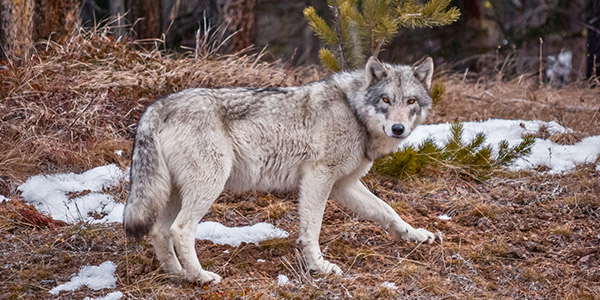
Our most clicked story in the spring 2025 newsletter
A lost wolf collar, found after 18 years, tells an incredible story
Deep in the forests of Montana, researchers recently discovered a weathered radio collar — once worn by Wolf 57, a female last seen in Banff National Park in 2003. Found 311 miles (500 km) away, her collar tells a powerful story: wolves and other wildlife need vast, connected landscapes to survive.
Wolf 57’s journey echoes that of Pluie, the legendary wolf whose 40,000-square-mile (100,000 sq. km) trek inspired the Yellowstone to Yukon vision.
Thanks to supporters like you, more than 177 wildlife crossings now link vital habitats across the region, giving animals the freedom to move safely.
Your support makes stories like this possible — keeping landscapes wild and wildlife on the move.
Do you have a donor-advised fund?
An investment in Y2Y will support once-in-a-generation initiatives
If you already have a donor-advised fund (DAF), we know one thing about you — you care!
People who establish DAFs are intentional about supporting charities that are meaningful to them. They provide secure funding and, in doing so, make a big impact.
For Y2Y, DAF gifts mean we can focus on pursuing Y2Y’s big, bold vision of an interconnected system of wild lands and waters stretching from Yellowstone to the Yukon, harmonizing the needs of people with those of nature.
If you share our vision, we invite you to consider this investment opportunity. Imagine being part of:
- Creating new protected areas in northern Canada, whose combined size is nine Yellowstone National Parks,
- Retrofitting bridges on busy roads, making roads safer for people and wildlife, and
- Supporting human-wildlife coexistence initiatives in key communities across the region.
These are examples of the transformational change we can create together.
If you’ve already invested in Y2Y through your DAF — thank you! Because of you, Y2Y has gained 80% more protected areas since 1993, 177 wildlife crossings throughout the region and has seen grizzly bear populations grow and expand their range.
You are a force for nature. And together, we keep this region the wildest on the planet.
We invite you to learn more about Y2Y’s goals and the impact you can help achieve on this magnificent landscape.
Image credits: Student Kylie Bute, supplied photo; Salamander crossing, K. Zenkewich; Kaska Dena territory photo by Nicole; inset photo of Scott Neidermayer, supplied photo; black bear photo, Shutterstock; artist Alison King, Drew Myers Photography; grizzly bear, Brigachtel/Pixabay; Bow Lake, Jaywild/Pixabay; aspens, Shutterstock.
|


