|

 |
||||
Looking to the year aheadBuilding on connections, partnerships and impact into 2026 As a new year dawned across the Yellowstone to Yukon region, it was a time for reflection on a year of important progress, and how these advancements are giving us great momentum as we head into 2026. Here's a collection of stories and updates that show how we are making a difference together. Thanks for being a supporter. A major conservation win in B.C.'s Elk ValleyDeal protects vital wildlife corridors in the Yellowstone to Yukon region We closed out last year with thrilling news: an area about the size of the city of New Orleans was secured for protection in British Columbia's Elk Valley — one of the most significant conservation deals in the Yellowstone to Yukon region in recent memory. This landscape is a lifeline for grizzly bears, wolverines, lynx, and wolves who depend on vast, connected spaces to survive. The protected lands are in Ktunaxa Territory and were secured in partnership with Nature Conservancy of Canada. This will safeguard wildlife corridors that support ancient animal migrations across the region. Some parcels straddle Highway 3, playing a crucial role around wildlife crossing structures we're building with partners to create safe passage for animals. The Kootenay Forest Lands encompass carbon-rich forests fighting climate change, headwaters feeding the Elk River, and critical habitat for southwest B.C.'s wildlife connectivity. This protection also advances Canada's goal to protect 30% of its land and waters by 2030. A profound win for people and nature. Advancements in landscape connectivity in MontanaVital Ground and Y2Y protect key Montana habitat along I-90 Late December brought a big victory for grizzly bears and wildlife in western Montana. Thanks to willing landowners and partners at Vital Ground Foundation, two critical habitat linkages along Interstate 90 near Missoula were successfully protected. The Brock Creek Project (near Garrison, MT) and Nellie Creek Project (near Superior, MT) safeguard low-elevation corridors that grizzly bears and other wildlife use to travel between mountain ecosystems. This protection also connects the Northern Continental Divide Ecosystem with other wilderness areas — including potential pathways to Yellowstone. Both sites are located near existing highway underpasses already seeing regular wildlife crossings. With major support from partners and funders including the Cinnabar Foundation, Heart of the Rockies, and Atira Conservation, these projects represent smart investments in balancing wildlife needs with human infrastructure. Crossing a major threshold — 204! — in wildlife structures across the Y2Y regionThe new Highway 3 underpass marks a milestone achievement There are now 204 wildlife crossings protecting wildlife and people across the Yellowstone to Yukon region. Drivers on Highway 3 face some of Alberta's highest wildlife-vehicle collision rates. In early February, Y2Y and partners congratulated the Alberta government on completing the Rock Creek wildlife underpass and fencing project on Highway 3 near Crowsnest Pass — a long-awaited success story Y2Y and partners have advocated for since a 2010 research report identified key hot spots for wildlife crossings. The project includes a new wildlife underpass with fencing along Highway 3 and part of Highway 22 to guide animals to it, helping future generations of wildlife thrive while providing safe passage for drivers. Now that's something to howl about! Y2Y goes globalSharing the success of wildlife crossings worldwide This month, we partnered with Planet Wild, a Berlin-based environmental organization and Certified B Corporation, to highlight wildlife crossing efforts along Highway 3 in southern B.C. and Alberta. The crew visited wildlife crossings along Highway 1 near Canmore — including a new crossing built by the Government of Alberta and Banff National Park's successful wildlife crossing system — and learned about our work with dozens of partners to Reconnect the Rockies along Highway 3. The film showcases how bridges, tunnels, and specialized fencing give grizzlies, elk, and wolves safe passage across dangerous highways. Planet Wild's community is also fundraising 50,000 Euros (approximately CAD$80,000 / US$60,000) to purchase GPS collars and remote cameras for our partners to use on Highway 3 research. Watch the film and share it with your networks — the more people understand how wildlife crossings work, the easier it becomes to build support for future projects. Be part of the movementWe're wowed by your support Thank you to the hundreds of returning donors and dozens of new donors who turned December 2025 into our biggest year end giving season yet. Your support keeps critical habitats protected, wildlife connected and thriving, and conservation efforts moving forward for people and nature. Thank you and let’s keep the momentum going in 2026. The 8 conservation stories you loved most in 2025Catch up on all the hits Last year brought exciting changes! We relaunched Conservation News as a biweekly newsletter, delivering nature's most inspiring stories from across the Yellowstone to Yukon region straight to your inbox. From wildlife comebacks to conservation breakthroughs and even some heartbreakers, our readers couldn't get enough. Below are eight stories that captured your attention most — tales of hope, discovery, and the incredible resilience of our natural world. If you aren't already getting these stories, want this news delivered to you?
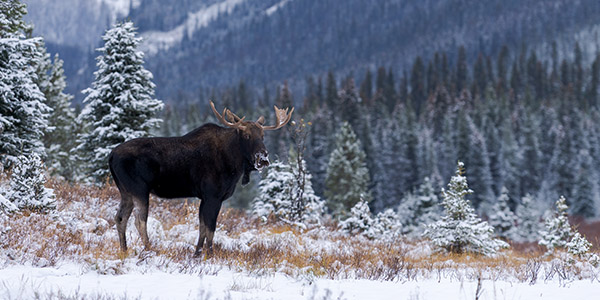
🐾 New crossings: Celebrating the official opening of the wildlife crossing over Highway 1 near Canmore, Alberta. Read the full story >> 🐾 Artful action: A Montana student’s mission to highlight wildlife crossings through art. See her mural >> 🐾 Salmon return: For the first time in over a century, sockeye salmon are able to return to Okanagan Lake. Discover how it happened >> 🐾 Building connection: A "bridge to nowhere" becomes a lifeline for Silver Valley’s elk in Idaho. See the transformation >> 🐾 Preventable tragedy: Grizzly bear killed on highway in Banff National Park. Read more >> 🐾 The grizzly conservation umbrella: How protecting habitat for bears helps native fish. Explore the connection >> 🐾 Corridor gardens: The ecological landscape trend connecting our backyards to the wild in 2026. Get inspired >> 🐾 No more flattened frogs: Oregon's newest wildlife crossing latest in growing movement. Learn about the project >> Header photo: A bull moose in Alberta's Kananaskis Country/Wild Moussa Photography |
||||
|
||||


